Western-Themed Experience on Yono Games
Dead or Alive brings a strong Wild West atmosphere into a structured slot experience built around simplicity, rhythm, and recognizable visual identity. The game is defined by desert tones, wooden textures, and iconic symbols inspired by classic Western imagery. Every spin feels grounded in a consistent theme, supported by clear animations and steady pacing that allow players to stay focused on the gameplay.
The design emphasizes clarity and contrast. Symbols are large, well-defined, and easy to follow even during fast spins. The overall structure avoids unnecessary complexity, making it accessible while still maintaining enough depth to support extended sessions.
Core Gameplay Structure and Reel Mechanics
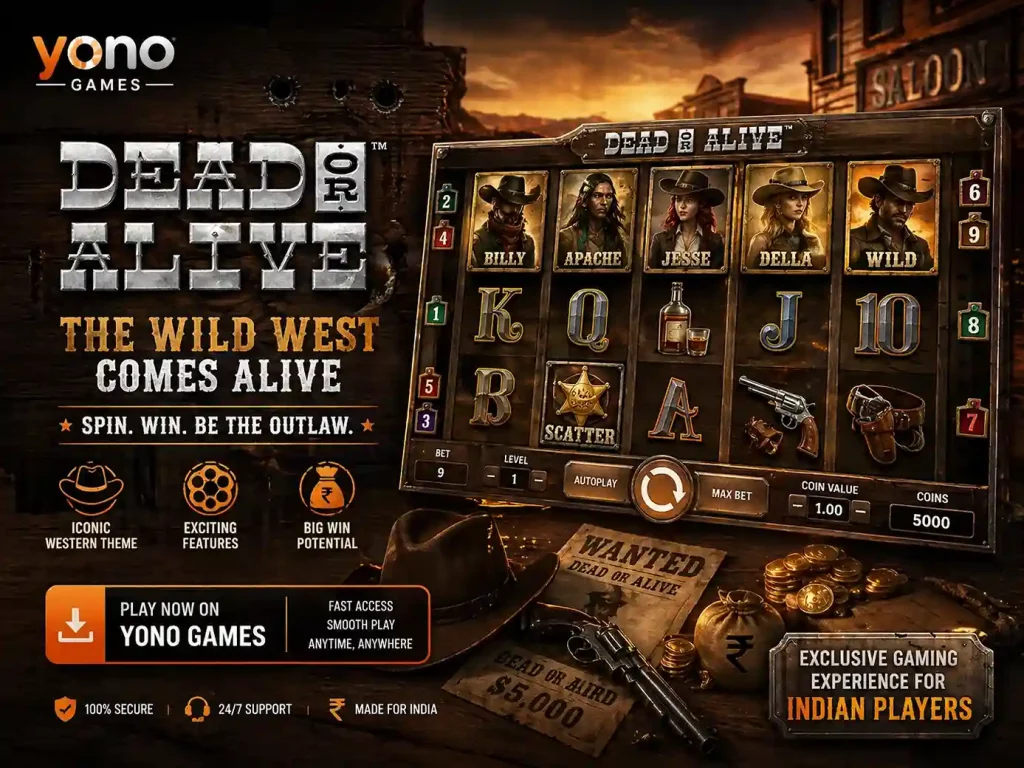
Dead or Alive follows a straightforward reel format that allows players to engage immediately. The layout is balanced, ensuring that all key elements remain visible and easy to understand. Spins are smooth, and transitions between outcomes are clean, creating a continuous flow.
The pacing of the game is controlled rather than chaotic. Instead of constant changes, the experience builds gradually, allowing players to adapt to the rhythm naturally. This makes it suitable for both short play sessions and longer engagement.
The structure ensures that gameplay remains accessible while still allowing room for interaction depth as sessions progress.
Visual Identity and Theme Integration
Dead or Alive builds its identity around Western storytelling. Symbols include outlaws, sheriff badges, and classic items associated with frontier life. These elements are designed to be instantly recognizable, helping players stay oriented during gameplay.
The color palette focuses on warm tones—orange, brown, and gold—creating a cohesive environment. Background elements remain subtle, supporting the reels without distracting from them.
Players exploring different Slots often encounter variations in design complexity, but Dead or Alive maintains a clear and focused visual structure that supports long-term engagement.
Interaction Flow and Gameplay Continuity
The interaction flow is designed to feel natural and uninterrupted. Each spin transitions smoothly into the next, maintaining a steady rhythm that supports immersion. Players can follow the sequence without needing to adjust to sudden changes.
Controls respond instantly, reinforcing the connection between player input and game response. This responsiveness is especially important for maintaining engagement during extended sessions.
Performance and Engagement Overview
The chart highlights how different performance elements contribute to the overall experience. Clarity and stability remain particularly strong, supporting consistent gameplay.
Accessibility and Platform Integration
Dead or Alive integrates smoothly into Yono Games, allowing players to access the game without delays. The transition from browsing to gameplay is seamless, ensuring that users can begin immediately.
Players can move through the platform quickly after a sign up, maintaining engagement without interruption. This accessibility supports both new and returning users.
Session Stability and Continuity
The game maintains stable performance throughout sessions. There are no abrupt changes or disruptions, allowing players to remain focused. This consistency is essential for maintaining immersion over time.
The pacing supports both quick interactions and extended play, ensuring flexibility without compromising engagement.
Experience Foundation and Flow Direction
Dead or Alive establishes a strong foundation through its combination of visual clarity, structured gameplay, and responsive controls. Each element contributes to a cohesive experience that supports both accessibility and depth.
The balance between simplicity and variation ensures that the game remains engaging over time, making it a reliable option within Yono Games.
Symbol System and Feature Interaction
Dead or Alive develops its gameplay through a structured symbol system that connects Western storytelling with clear interaction roles. Each symbol is designed to be instantly recognizable, allowing players to follow the reels without confusion even during faster spins. The balance between themed visuals and functional clarity ensures that the experience remains both immersive and easy to navigate.
The symbol set includes characters, classic Wild West items, and supporting icons that maintain variety without overwhelming the player. This combination allows the game to feel dynamic while preserving a stable visual structure.
This structured symbol system helps maintain clarity while supporting the Western theme. Players can quickly recognize key elements and follow the gameplay without difficulty.
Feature Activation and Momentum Flow
Dead or Alive introduces feature interactions in a controlled and predictable way. Instead of overwhelming the player with constant effects, the game allows momentum to build gradually. This creates a natural progression where feature moments feel more impactful.
Visual indicators clearly signal when a feature is about to activate. This ensures that players remain aware of important events without needing to analyze every spin. The transition between base gameplay and feature activation is smooth, maintaining immersion.
A well-timed bonus can enhance the session, adding energy without disrupting the overall flow.
Session Rhythm and Player Engagement
The rhythm of Dead or Alive is consistent and steady. Each spin contributes to a broader progression, creating a sense of continuity that supports long sessions. Players can engage at their own pace without feeling rushed or restricted.
This controlled pacing allows the game to remain engaging without relying on constant variation. Instead, it builds interest through repetition and gradual development.
Feature Distribution Overview
The distribution chart shows how different gameplay aspects contribute to the overall experience. The balance between clarity, pacing, and feature timing ensures a stable session flow.
Mobile Optimization and Cross-Device Performance
Dead or Alive performs consistently across devices, maintaining clarity and responsiveness on both desktop and mobile. The layout adapts to smaller screens, ensuring that symbols remain readable and controls stay accessible.
For mobile users, access through an apk supports stable performance and smooth interaction. This ensures that the experience remains consistent regardless of device.
Replay Value and Gameplay Variation
Replay value in Dead or Alive comes from its structured consistency combined with subtle variation. While the core mechanics remain stable, differences in feature timing and symbol combinations create unique session experiences.
This balance prevents the game from feeling repetitive while avoiding unnecessary complexity. Players can return to the game and quickly re-engage without needing to relearn the mechanics.
Platform Integration and User Flow
Within Yono Games, Dead or Alive integrates seamlessly into the platform. The transition from navigation to gameplay is smooth, allowing players to start quickly and continue without interruption.
The game feels like a natural part of the platform ecosystem, supporting a cohesive experience across different sections.
Interaction Depth and Experience Development
As sessions continue, players become more familiar with the mechanics, allowing them to focus more on the overall experience. This familiarity enhances engagement and supports longer sessions.
The interaction depth grows gradually, ensuring that players are never overwhelmed. Each element contributes to a stable and cohesive gameplay experience.
Advanced Interaction Layers and Session Progression
Dead or Alive continues to reveal more depth as sessions extend, not through complexity, but through how existing elements interact over time. The game builds a layered experience where each component—symbols, pacing, and visual feedback—contributes to a unified structure. This approach allows the gameplay to remain easy to follow while still feeling dynamic.
The progression is gradual. Early gameplay establishes rhythm and familiarity, while later stages refine interaction and timing. This ensures that players can stay engaged without needing to constantly adjust to new mechanics.
Layered Gameplay Structure
The internal structure of Dead or Alive can be understood through its interaction layers. Each layer adds a specific function, helping maintain both clarity and engagement throughout the session.
This layered model ensures that gameplay evolves naturally. Each part of the system supports the others, creating a consistent and predictable flow.
Player Flow and Control Precision
Dead or Alive maintains a high level of control responsiveness. Every input is reflected immediately, ensuring that players feel connected to the game. This precision becomes especially important during longer sessions, where consistency supports immersion.
The interface remains stable across all stages of gameplay. Players do not need to adjust to changing layouts or unexpected shifts, allowing them to focus entirely on interaction.
For users entering through a quick sign up, the transition into gameplay remains smooth, supporting uninterrupted engagement.
Engagement Development Over Time
As sessions extend, engagement tends to increase due to familiarity with pacing and interaction patterns. Players begin to anticipate outcomes more naturally, which enhances immersion without requiring additional complexity.
This gradual development keeps the experience engaging while maintaining clarity. The game does not rely on sudden changes but instead builds interest through consistent interaction.
Engagement Radar Overview
The radar chart illustrates how different engagement factors contribute to the overall experience. The balance across categories ensures that no single aspect dominates the gameplay.
Mobile Optimization and Adaptive Performance
Dead or Alive adapts effectively to mobile environments, maintaining readability and responsiveness. The layout ensures that all key elements remain accessible, while animations scale efficiently to preserve performance.
This adaptability supports a consistent experience across devices, allowing players to engage comfortably regardless of screen size.
Replay Value and Interaction Variation
The replay value of Dead or Alive comes from its ability to maintain a consistent structure while introducing subtle variation. Differences in feature timing and symbol combinations create new session experiences without altering the core gameplay.
This balance prevents repetition while maintaining familiarity. Players can return to the game and quickly re-engage without needing to relearn the system.
Platform Integration and Experience Continuity
Within Yono Games, Dead or Alive integrates seamlessly into the platform. The transition between sections remains smooth, ensuring that players can move freely without interruption.
This integration supports a cohesive experience where gameplay feels like a natural extension of the platform environment.
Experience Stability and Progression Direction
Dead or Alive maintains stability across all stages of gameplay. The combination of visual clarity, structured pacing, and responsive controls ensures that the experience remains engaging over time.
Each element contributes to a unified flow that supports both immediate engagement and long-term replay value.
Long-Term Flow and Final Experience Structure
Dead or Alive reaches its full strength when the entire session flow becomes familiar and consistent. The game does not rely on constant variation to hold attention. Instead, it builds a reliable structure where pacing, symbol behavior, and feature timing work together in a predictable rhythm.
As players continue interacting, the experience shifts from learning mechanics to maintaining flow. This transition is important because it allows longer sessions to feel natural rather than demanding. The stability of the system ensures that players remain focused without needing to adjust to sudden changes.
Session Behavior Patterns and Player Styles
Different session styles naturally emerge as players spend more time with Dead or Alive. The game supports these variations without forcing a specific approach, allowing users to engage based on their preferred pace.
These patterns show how Dead or Alive adapts to different types of interaction. The structure remains consistent, ensuring that each session type feels stable and predictable.
Session Distribution and Player Focus
The distribution highlights how players engage across different session types. Balanced sessions tend to dominate, while quick and extended play provide variation.
Visual Consistency and Theme Strength
Dead or Alive maintains a strong Western identity throughout all stages of gameplay. The theme remains consistent, with symbols and visuals reinforcing the overall setting. This stability ensures that players remain immersed without distraction.
The use of warm tones and clear symbol design keeps the interface readable even during fast gameplay. This clarity is essential for maintaining engagement during longer sessions.
Accessibility and Entry Flow
The game is designed for immediate access within Yono Games. Players can enter quickly and begin interacting without delays, maintaining continuity from platform navigation to gameplay.
A simple sign up process allows new users to transition directly into the experience. This smooth entry supports consistent engagement from the very beginning.
Cross-Session Continuity and Replay Value
Dead or Alive maintains continuity across sessions, allowing players to return without needing to relearn the mechanics. The core structure remains stable, while small variations in feature timing keep the experience engaging.
This balance between familiarity and variation supports long-term replay value. Players can continue interacting with the game without feeling repetition.
Platform Integration and Cohesive Experience
Within Yono Games, Dead or Alive integrates seamlessly into the platform. The transition between sections remains smooth, ensuring that players can move freely without interruption.
The game feels like a natural part of the platform ecosystem, supporting a consistent user experience across different areas.
Dead or Alive delivers a structured and balanced gameplay experience that combines clear visuals, stable pacing, and responsive interaction. Each element contributes to a cohesive flow that supports both short sessions and extended play.
The combination of consistency and subtle variation ensures that the game remains engaging over time, making it a reliable option within Yono Games.






Comments